Drying equipment calculator
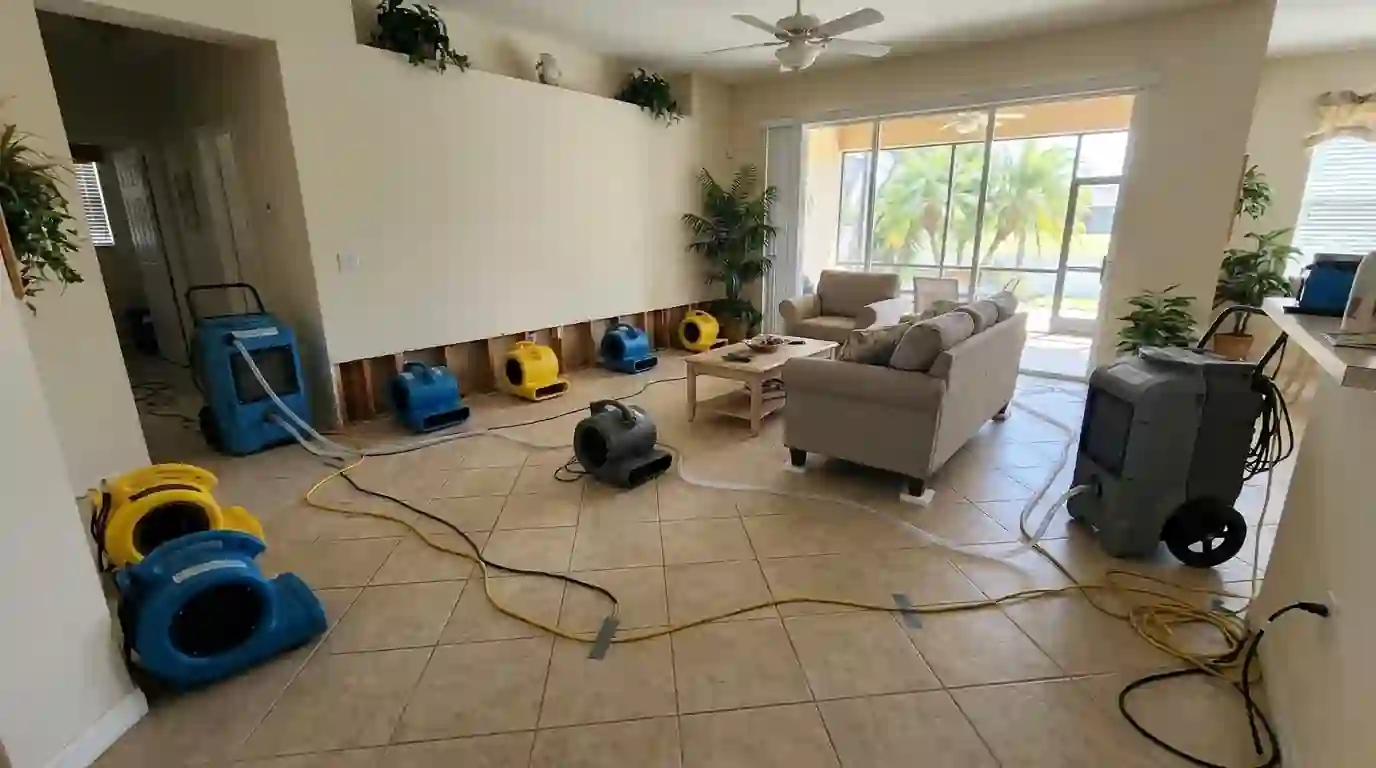
Enter the size of a wet room and a few details. The calculator gives a typical number of air movers, low grain refrigerant dehumidifiers and drying days, using rules of thumb restoration crews use in Central Florida homes.
This is a planning number. On site we set equipment by meter readings and move it as areas dry.
Talk it through: (407) 548-1130How the estimate works
Air movers are counted by the length of wet wall and the floor area, with extra units for wet ceilings, cabinets and hardwood. Dehumidifiers are sized from the room's volume and how much water the materials hold. Drying days come from the water class and the floor type.
What the water class means
Class 1 is a small, light loss. Class 2 is a whole room with wet carpet and lower walls. Class 3 is water from above that soaked ceilings and walls. Class 4 means dense materials like hardwood, plaster or concrete held the water, which needs slower, specialty drying.
Why Florida drying takes this long
Outdoor air in Orlando is often wetter than the air in the room being dried, so homes stay closed and dehumidifiers do the work. That is also why drying continues overnight.
When the numbers change on site
Meter readings decide the final setup. Rooms that connect, water under cabinets or tubs and slab moisture all add equipment or days.
About the calculator
Is the calculator a quote?
No. It shows typical equipment counts and drying time. Your crew sets the plan from readings in your home.
Can I rent equipment and dry it myself?
For a small clean-water spill, sometimes. Without meter readings, it is easy to stop too early and leave water inside walls.
Why do you use LGR dehumidifiers?
Low grain refrigerant units keep pulling water out of the air even after a room feels dry, which is what finishes a drying job.
Water where it should not be?
Call the 24/7 line. A person answers, asks a few questions about the source and the rooms involved, and gives you an arrival window for a drying crew.