Water Leak Detection
A hidden leak keeps adding damage every day, and finding it without tearing open walls saves money.
See how we handle itA supply line under city pressure can put out several gallons a minute until someone finds the shutoff.
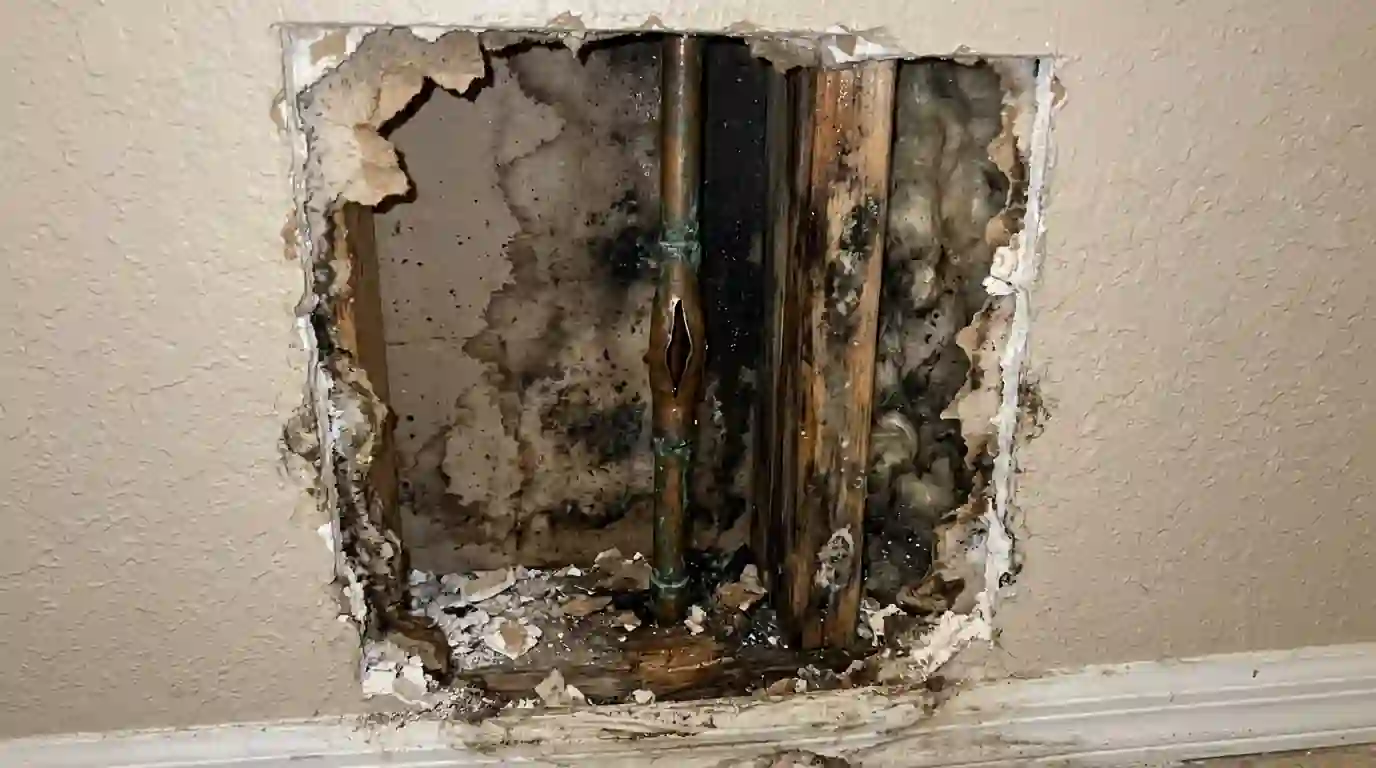
Stop the source first, then call. In Orlando this work usually costs $1,180 to $5,640 (for water cleanup and drying, plumbing repair extra) and takes 3 to 4 days.
Burst and split supply lines are some of the fastest-moving water losses we see. The water is clean at first, but it soaks walls and floors quickly and spreads under tile and baseboards.
We extract, find out how far the water went inside the wall, and dry the cavity. Your plumber repairs the pipe; we can work around their visit or open the wall where they need it.
Polybutylene supply lines, still found in some 1980s and 1990s Orlando homes, and early PEX fittings in newer builds are common causes. A frozen pipe is rare here; a failed fitting is not.
Crews carry extraction tools, meters, a thermal camera and drying equipment on every truck, so the first visit can start the work instead of just looking.
The steps below are what you can expect on a burst pipe water damage job in an Orlando home.
Each circle shows a typical meter reading at that stage, falling toward dry.
We find and close your main shutoff if it is still running.
Standing water comes out before it spreads further.
A small section is opened so the pipe can be fixed and the cavity dried.
Cavity and room drying with daily readings.
Drywall is patched once the wall reads dry.
In most Orlando homes it is near the meter at the street or on an outside wall close to the garage. Many newer homes also have one in the garage.
It starts clean. If it sits for a couple of days or runs through dirty materials, it is treated as a dirtier category.
That is a plumber's call. We note the pipe type we find so you have it for the conversation.
Our water damage crews handle burst pipe water damage across Orlando and these Orange and Osceola County areas.
A hidden leak keeps adding damage every day, and finding it without tearing open walls saves money.
See how we handle itWet drywall loses strength, swells at the bottom and grows mold on its paper face if it stays damp.
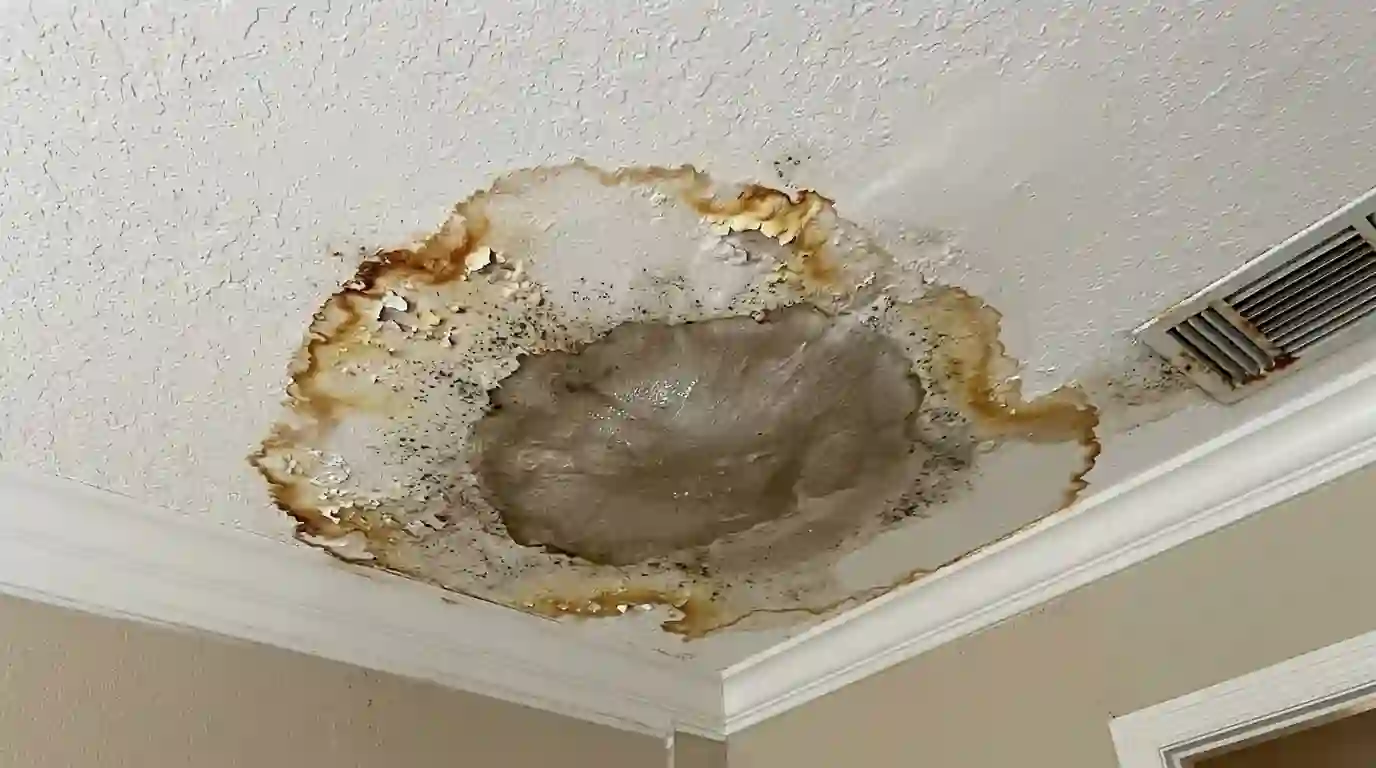
See how we handle itA brown ring on the ceiling means water has been sitting on top of the drywall, and the board can sag or drop.
See how we handle itCall the 24/7 line. A person answers, asks a few questions about the source and the rooms involved, and gives you an arrival window for a drying crew.