Storm & Hurricane Water Damage
Wind-driven rain gets in around windows, doors, soffits and roof edges, and it often shows up hours after the storm passes.
See how we handle itRain driven sideways by storm winds gets in around window frames and sliders and soaks the wall below.
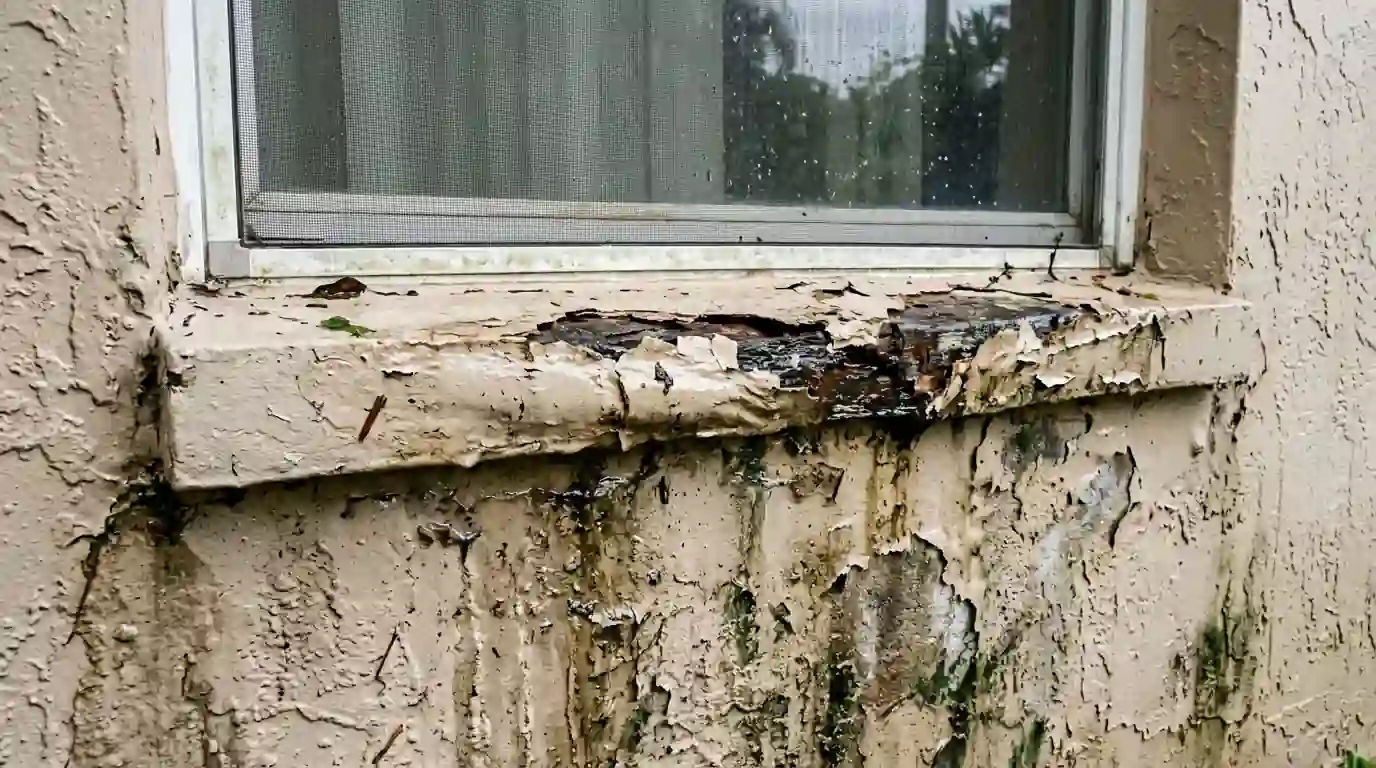
Stop the source first, then call. In Orlando this work usually costs $560 to $3,140 (for drying and trim removal, window repair extra) and takes 2 to 3 days.
Window and door leaks come from failed caulk, worn seals, cracked stucco around the frame and sliding door tracks that fill with water. The damage shows up as swollen trim, peeling paint and wet carpet along exterior walls.
We dry the wall and floor, check inside the wall cavity, and note where the water got in so the window or stucco can be resealed.
Central Florida's block and stucco homes take a beating from wind-driven rain. Older aluminum windows and slider tracks are common entry points in summer storms.
From Pine Hills to Lake Nona, the housing stock changes block by block, so we check how your home was built before deciding what to open and what to dry in place.

The steps below are what you can expect on a window & door leak water damage job in an Orlando home.
The numbers are typical wall readings as the job moves toward the dry goal.
Readings around the frame show where water comes in.
Baseboards and wet trim come off for drying.
The wall below the window is dried from inside.
Lower wall areas are checked for growth.
We mark where the window or stucco needs sealing.
It usually leaks when wind pushes rain against that side of the house. That points to a seal or stucco gap facing the wind.
Yes. Water gets behind stucco through cracks, especially around window corners.
We dry the damage and point out where water entered. A window or stucco contractor reseals it.
Our water damage crews handle window & door leak water damage across Orlando and these Orange and Osceola County areas.
Wind-driven rain gets in around windows, doors, soffits and roof edges, and it often shows up hours after the storm passes.
See how we handle itWet drywall loses strength, swells at the bottom and grows mold on its paper face if it stays damp.
See how we handle itMold inside a wall cavity can grow for months behind a clean-looking surface.
See how we handle itCall the 24/7 line. A person answers, asks a few questions about the source and the rooms involved, and gives you an arrival window for a drying crew.