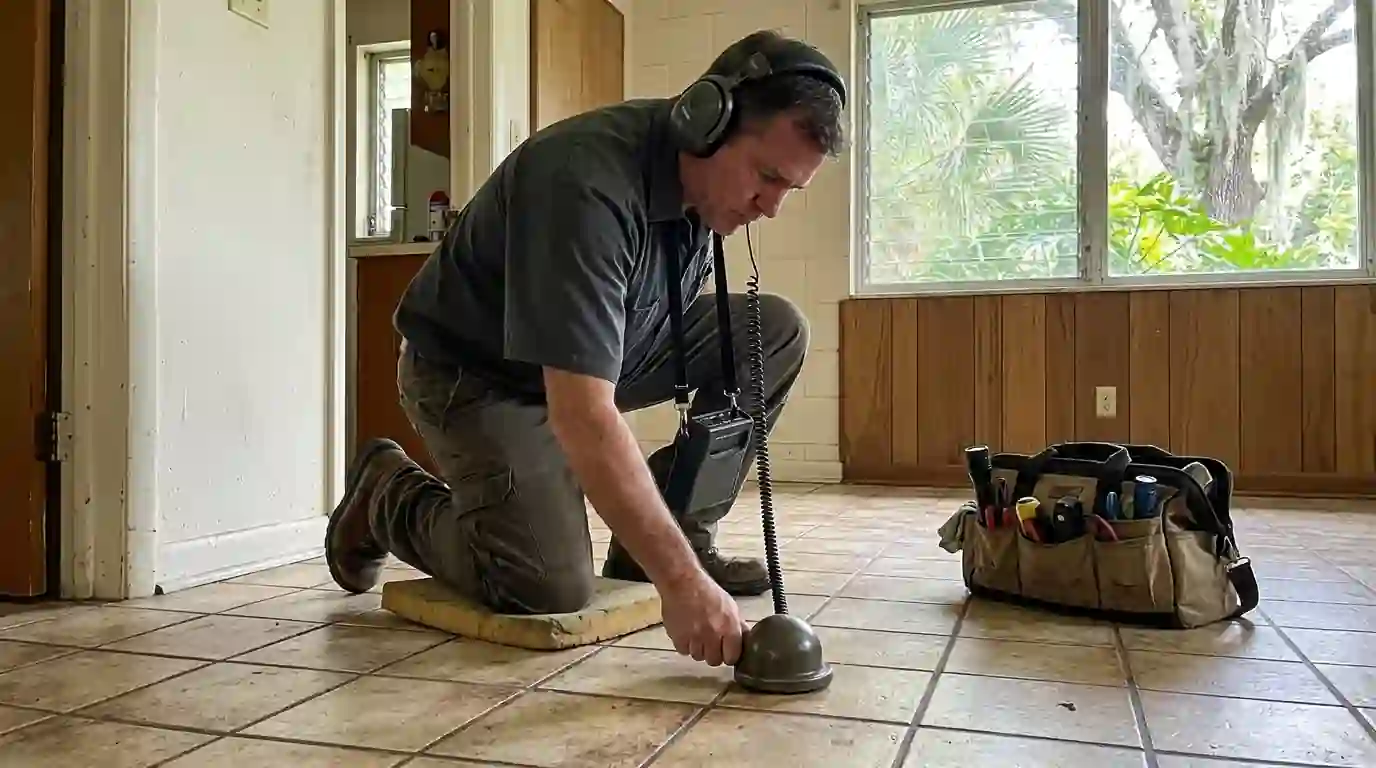
Why slab leaks happen here
Many Orlando-area homes built from the 1950s through the 1970s have copper water lines running under or through the concrete slab. Over decades, the copper can wear through where it rubs against concrete or rock.
Signs to watch for
A warm spot on the floor, the sound of running water with everything off, a water meter that keeps moving, cracked or loose tile in one area, and damp carpet with no source above it are the signs we hear about most.
How it is confirmed
A plumber confirms a slab leak with pressure tests and acoustic or thermal tools. Many plumbers now reroute the line through the attic or walls instead of breaking the slab.
Drying after the repair
The slab and everything on it still need drying. Tile may stay, vinyl plank and carpet often come up, and drying can run five days or more while we read the slab.
A quick meter test
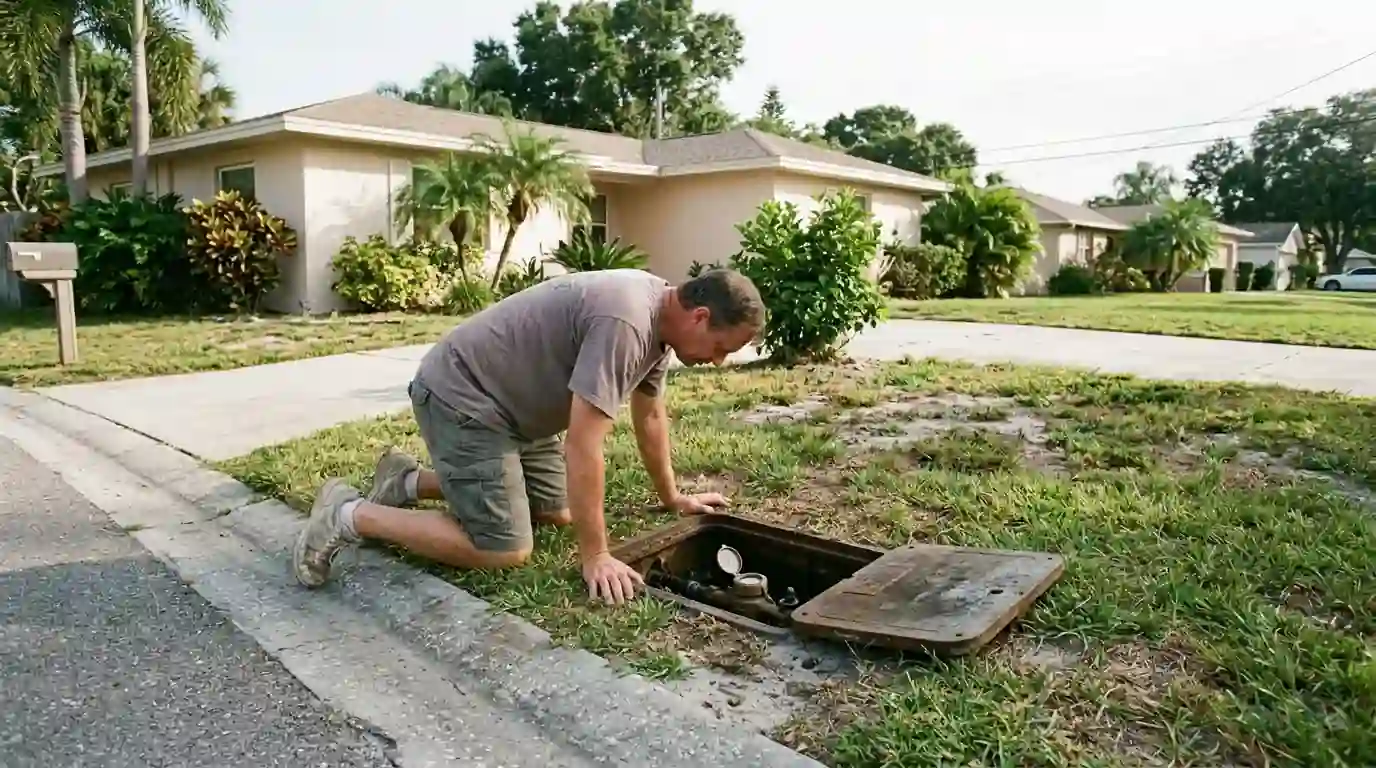
Turn off every faucet, appliance and the irrigation system. Look at the water meter at the street. If the small leak indicator or the dial keeps moving for several minutes, water is going somewhere. That does not prove a slab leak, but it is a good reason to call a plumber.
Quick answers
Does homeowners insurance pay for slab leaks?
Policies differ on the plumbing repair, access and water damage. Ask your insurer which parts your policy covers.
Can a slab leak cause mold?
Yes, under flooring and at the base of walls if it runs long enough.