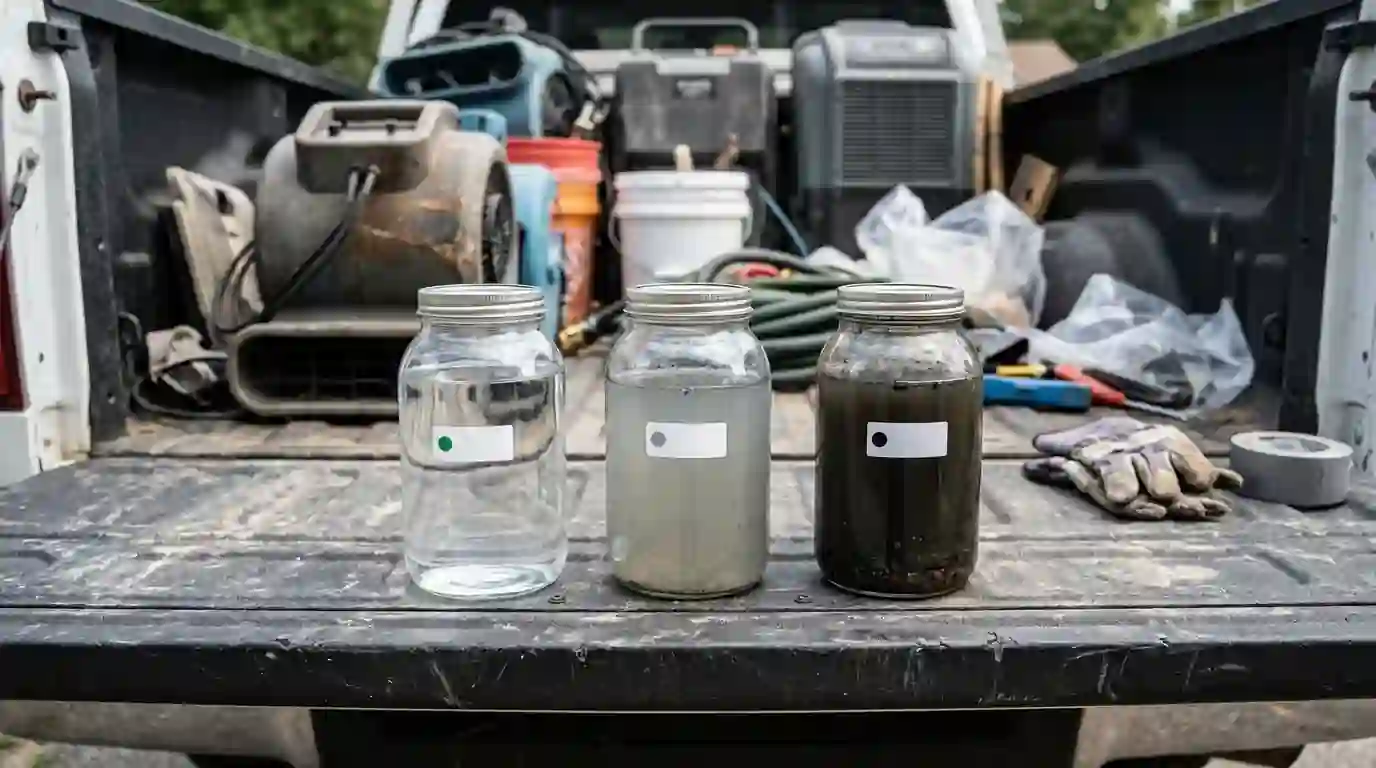
Category 1, clean water
Water from a supply line, a sink faucet or a water heater starts clean. Carpet, pad and drywall wet with clean water can often be dried and kept if drying starts quickly.
Category 2, gray water
Gray water carries some contamination: dishwasher and washer drain water, a toilet bowl with urine only, or clean water that has sat for a couple of days. Pad is usually replaced and surfaces are cleaned before drying.
Category 3, black water
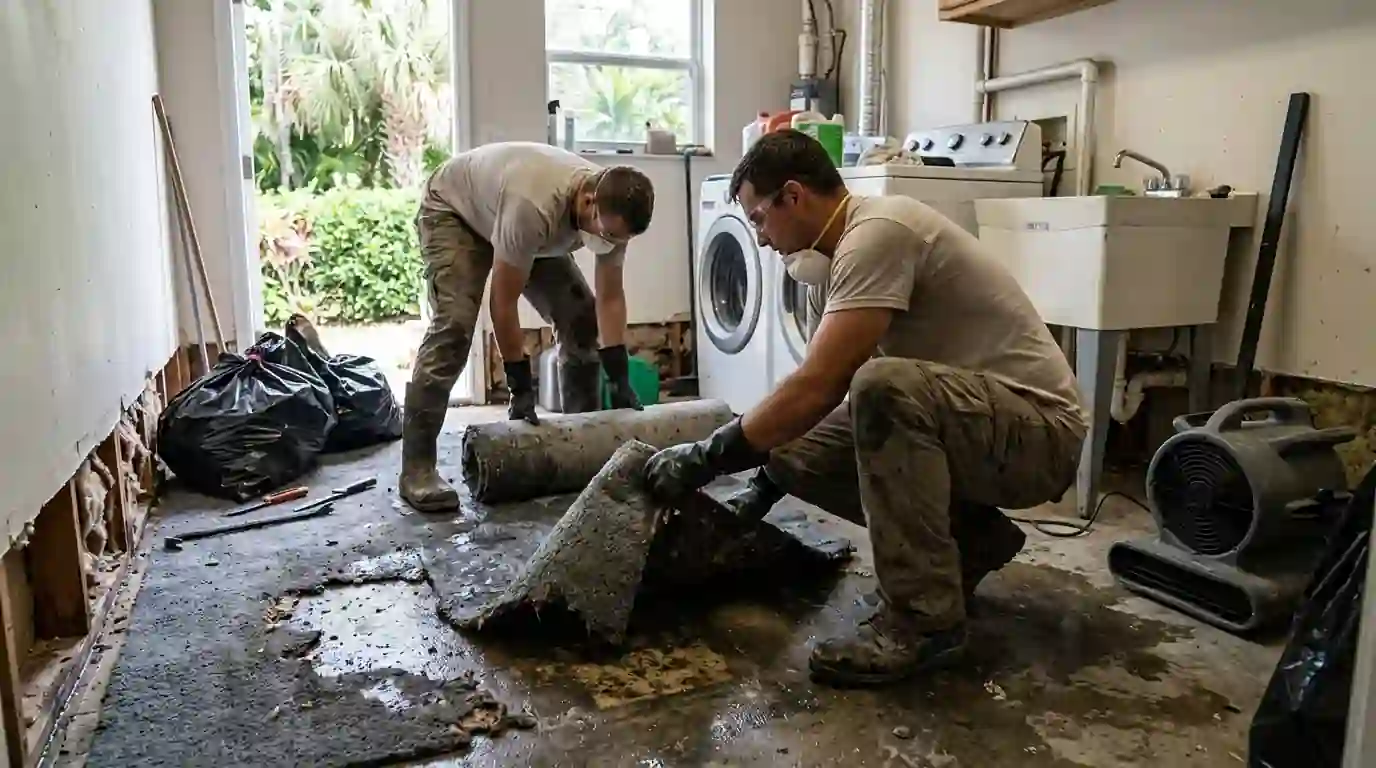
Sewage, outside flood water and water that has sat long enough to grow bacteria are treated as black water. Porous materials it touched, such as carpet, pad, drywall and insulation, are removed. Hard surfaces are cleaned and treated before drying.
Water can change category
Clean water that sits in a warm Orlando home for two or three days can turn gray, and gray water can turn black. That is one more reason fast extraction saves money.
Why the category matters for your claim
The category is written into the job record with photos of the source. It explains to an adjuster why some materials were dried and kept while others were removed. Without that note, a removed carpet can look like an upgrade instead of a necessity.
Quick answers
Who decides the water category?
The restoration crew, based on the source and how long the water sat. It is recorded in the job file.
Is pool or rain water clean?
Rain coming through a roof is usually treated as clean at first. Water that ran across soil or a yard is not.