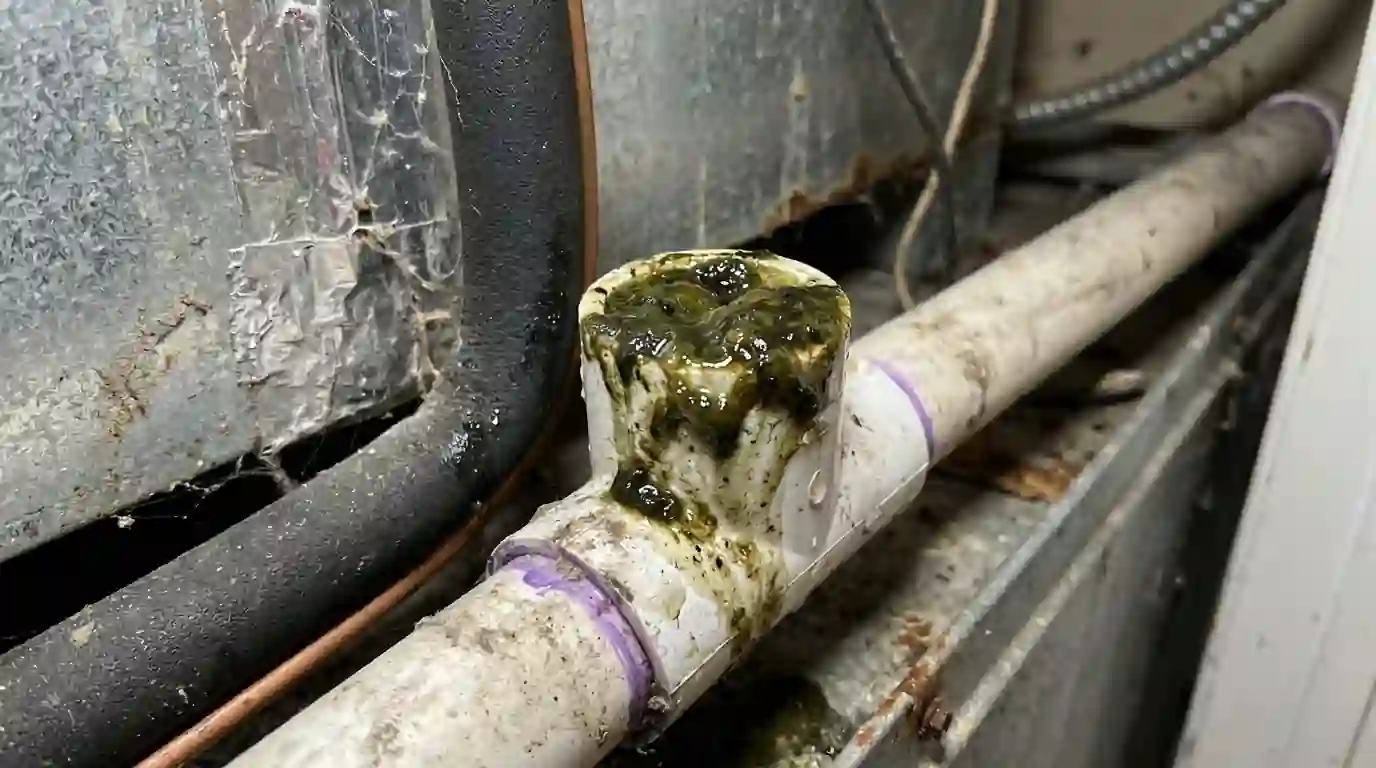
Your AC makes water all day
On a humid Orlando day, a home air conditioner can pull several gallons of water out of the air. That water drips off the coil into a pan and runs through a small PVC line to the outside.
Algae is the usual culprit
Warm, slow-moving water in that line grows algae and slime. Over a few months it narrows the pipe until it backs up. The pan fills, and if there is no working float switch, it overflows.
Where the water ends up
If the air handler sits in a hallway closet, water spreads into carpet and baseboards. If it sits in the attic, the ceiling below takes it, often over a bedroom or hallway. Either way, the damp closet is a common place for mold.
Simple prevention
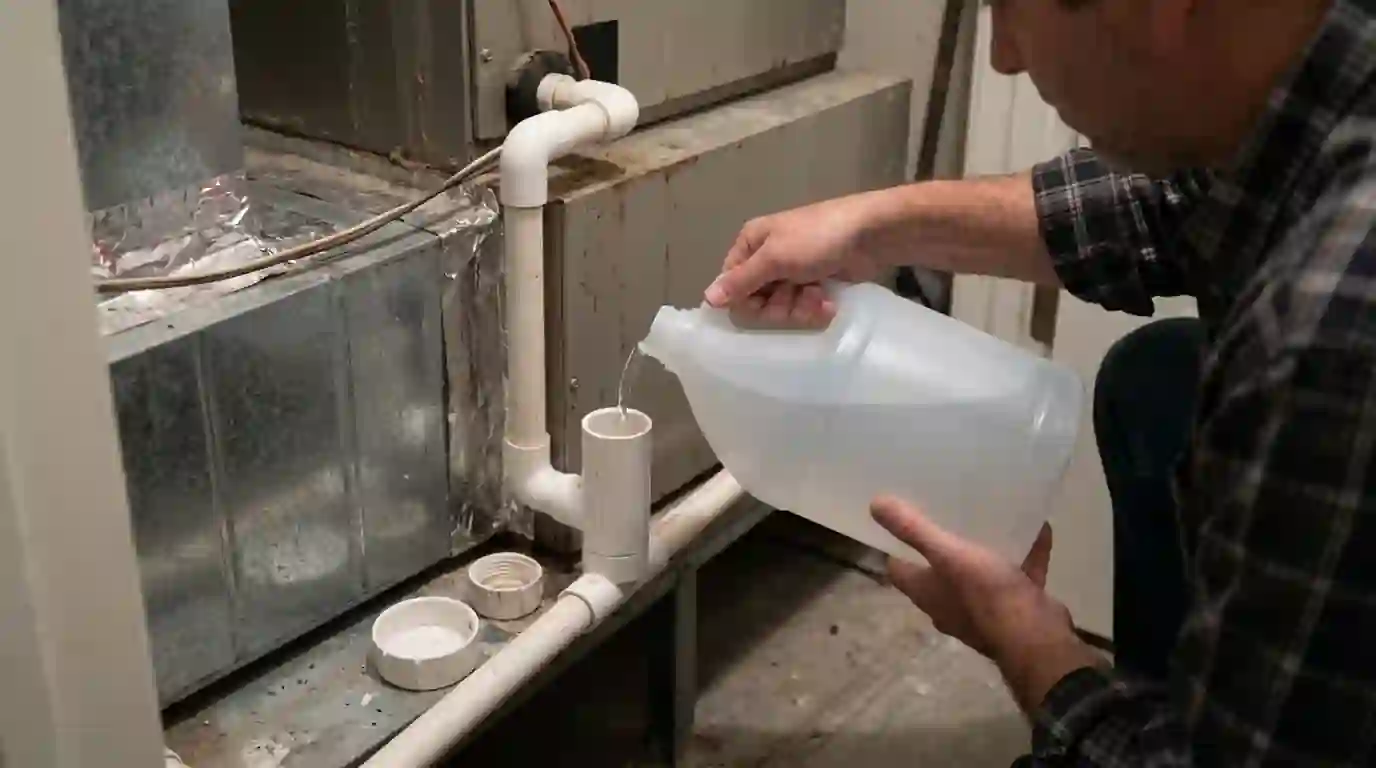
Many homeowners pour a cup of white vinegar into the line's access port every month or two. A float switch that shuts the AC off when the pan fills is cheap insurance. Ask your AC company to clear the line at every service visit.
What we check after an overflow
We read the closet floor, the walls around it and any ceiling below an attic unit. We look at the return and the closet drywall for mold, because a pan that overflowed slowly for weeks leaves the closet damp long after the floor looks dry.
Quick answers
How do I know my drain line is clogged?
Water in the pan, a gurgling sound, or the AC shutting off on its float switch are common signs.
Can I clear the line with a wet vacuum?
Many homeowners pull the clog out from the outside end with a wet vacuum. If water is already on the floor, call for drying too.